
The right fit is in the details
A size label is the beginning. The real test is whether the guard stays correctly positioned when your hand, glove and equipment work together.
Updated 8 November 2026
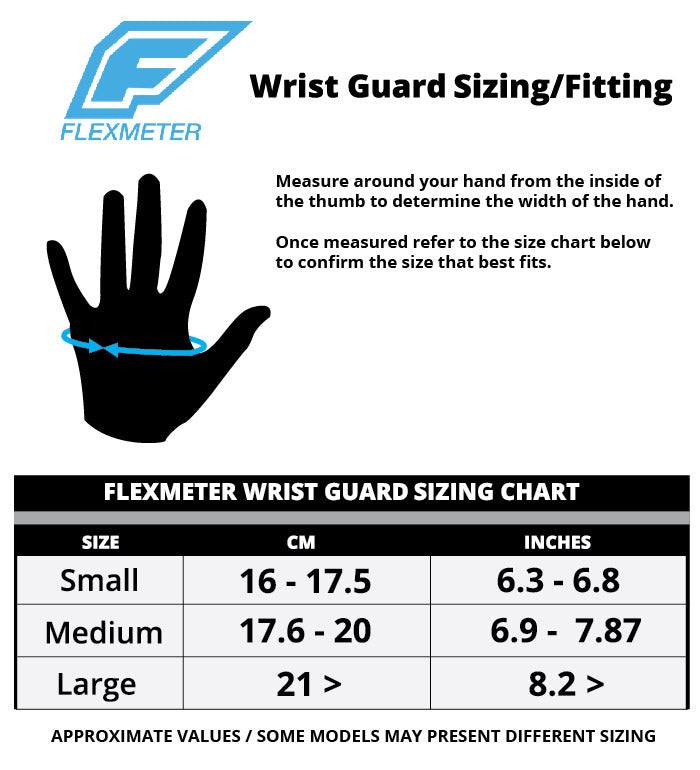
Size chart and measuring your hand
Use a soft tape to measure around your hand at the position shown, just below the fingers and excluding the thumb. This is hand circumference, not wrist circumference or hand length.
If the table extends beyond the screen, use the arrow keys to scroll horizontally.
| Size | Hand circumference · approx. |
|---|---|
| S | 16–17.5 cm |
| M | 17.6–20 cm |
| L | 21 cm and above |
The manufacturer's figures are a guide; the fit can vary between models. If your measurement is between 20 and 21 cm, at a boundary or outside the listed ranges, ask us for advice. Trying the correct model with your own outer glove remains the deciding step.
Prepare for an unhurried fitting
Use the gloves or mittens you actually intend to wear. If you normally use a thin liner, have it ready too. Try both hands: comfort on one side does not tell you how the other will feel. Keep the product instructions beside you so the position of each part is clear.
Begin indoors with dry hands and relaxed straps. Trying to force a hand through tightly closed straps can distort the fitting process. A few minutes spent finding the correct position are more useful than repeatedly tightening a guard that started in the wrong place.
Double’s removable palm plate
Before trying on gloves, identify the removable outer plate and the cushioning that stays in place.

Removable skid plateMore information
The outer skid plate at the palm detaches from its shaped hook-and-loop patch. For wear beneath suitable winter sports gloves, Demon recommends removing this plate; the fixed D3O cushioning stays in place.
Photo: Demon United · edited
Wear Flexmeter under suitable gloves or mittens. After changing the setup, check the position, comfort and grip of the complete combination again.
Find the wrist before adjusting the straps
Slide your hand into the guard and bring the thumb opening to the base of the thumb. The long support belongs on the back of the hand. Its flexible bend should align with the wrist, where the hand meets the forearm.
Check the top of the support: it reaches towards the knuckles or just beyond them, while the fingers remain free. If you have to force the product into place, or its bend sits clearly away from your wrist, revisit the position and size rather than tightening harder.
Three straps, adjusted in a useful order
Close the wrist strap first, then the other straps. This helps establish the main position before you secure the rest of the guard. Tighten enough to prevent slipping or twisting while keeping the fit comfortable.
More tension is not automatically better. Pressure, tingling or numbness are reasons to loosen the straps and recheck the fit. The aim is stable alignment, not the strongest squeeze you can tolerate. A guard that needs excessive tension to remain in place may not be sitting correctly.
Add the outer glove and check again
Pull your glove or mitten over the guard without moving the support. Thick gloves belong outside it. Check for pressure around the back of the hand, the wrist opening and, on Double, the palm component.
Move the fingers through their normal range and practise the grip needed for your activity. A fitting is incomplete if you have only managed to close the glove. You need to handle your equipment safely and comfortably as well.
A thin liner can help with warmth when it does not disturb the fit. Smooth any folds and avoid bulky seams under the straps. Every extra layer changes the combination, so repeat the check whenever you change gloves or liners.
What a size chart can and cannot decide
Use the current size information for the exact model to narrow down the choice. Measure carefully according to the illustrated method; a hand circumference and a hand length describe different things and cannot be substituted for one another.
If you are between sizes, give us the measurement, the model and the glove you intend to use. A letter on a label cannot account for every hand shape or glove cut. A larger guard is not a way to make a tight glove roomier: the support still needs to align with the wrist.
Your final fitting check
- The thumb opening sits at the base of the thumb.
- The support’s bend lines up with the wrist.
- The fingers move freely.
- All three straps hold without uncomfortable pressure.
- The guard does not twist or slide when the glove goes on.
- Your grip and any equipment controls remain reliable.
Repeat the check when something changes
New gloves, a different liner, wet fabric or a strap that has gradually loosened can alter the feel. Make a brief check before each session rather than relying on the way everything fitted last season. Inspect the straps and fastenings as you do it.
Our advice draws on many years of fitting questions and on the current instructions. If a combination remains uncomfortable, describe where it presses and send the model details. That is more useful than simply asking whether a particular glove size will fit every Flexmeter.
Choose gloves to suit you and replace them separately
With separate Flexmeter Single or Double guards, you choose the gloves or mittens that fit over them and suit your needs. Compare different cuts, materials and levels of warmth, then decide which quality and price suit you. Include protection from wet conditions, comfort when your hands perspire, and the finish of seams and linings in that choice.
The glove must meet your preferences while leaving room for your hand and the correctly adjusted guard. Wear Flexmeter under the glove or mitten and repeat the fitting check whenever you change the combination. Allow for Double's palm component; with Single, the back of the hand and straps still need room.
You can use the guards with different suitable gloves or mittens, for example when you want more warmth on colder days. The gloves can also be worn without the guards, as long as they still fit properly and suit the activity. This leaves you free to use the two products in different combinations.
It can also reduce the cost of replacements. If the gloves wear out first while the guards remain fit for continued use, you only need to buy new compatible gloves. Inspect the guards before every use and replace them for damage, unreliable fastenings or after a heavy impact, even if no damage is visible.
Demon Flexmeter FW58 glove: why we do not currently stock it
We are not adding the Demon Flexmeter Double-Sided snowboard glove, model FW58, to our range for now. This is the glove with built-in Flexmeter wrist supports. We set high quality standards for snowboard gloves used with Flexmeter.
In our experience, this version wears too quickly. Its protection against wet conditions and its comfort when hands perspire also fall short of what we expect from a snowboard glove. For these reasons, we do not currently consider it suitable for our range.
We are in contact with Demon United USA about this. We would only consider stocking the glove once the version offered meets our quality requirements.
Separate Single or Double guards leave you free to choose suitable gloves for their warmth, materials, quality and price, and to replace gloves and guards independently when needed.
The product codes below identify the FW58 glove. With separate Flexmeter Single and Double wrist guards, choosing a suitable outer glove remains a separate fitting decision. The advice on this page helps you assess that combination.
If the table extends beyond the screen, use the arrow keys to scroll horizontally.
| Size | Demon product code |
|---|---|
| S | FW58-01 |
| M | FW58-02 |
| L | FW58-03 |
| XL | FW58-04 |